CNC Machining Cost Per Part: What Actually Drives the Quote
A CNC quote is setup time divided by batch size, plus cycle time, plus material at bar or block price, plus finishing, inspection and margin. On a 100-piece run setup adds roughly 8–15% of the unit price and finishing 10–25%; on a single prototype, setup alone can be 40% or more of the total.
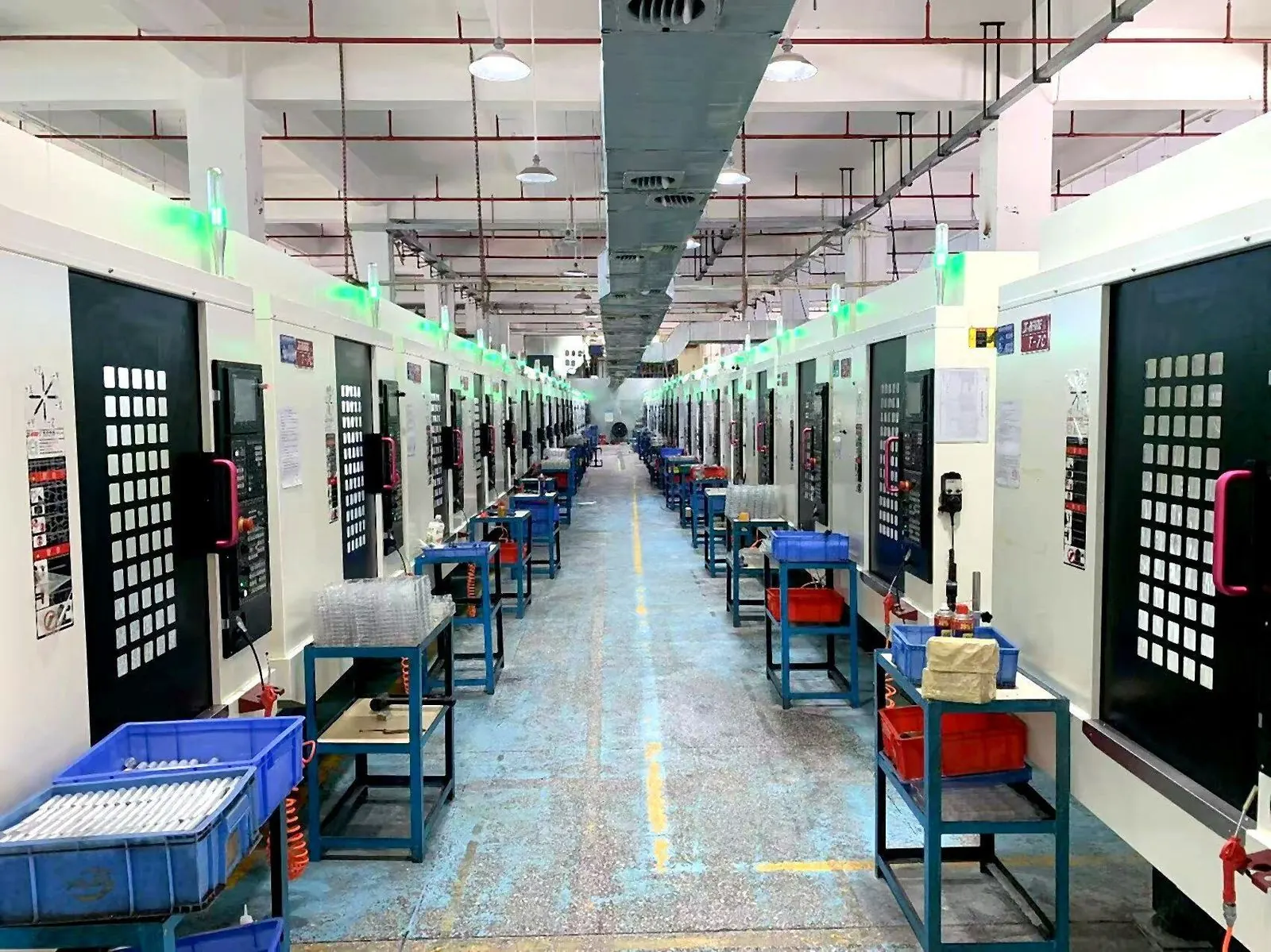
What is actually inside a CNC quote?
A machining price is not one number, it is six numbers added together. Buyers who can see the breakdown negotiate better, and engineers who can see it design cheaper parts. The structure is the same at every shop, only the rates differ.
| Cost term | Typical share on a 100-piece aluminium job | How it is calculated |
|---|---|---|
| Setup | 8–15% | Programming + fixture build + first-article time, divided by batch size |
| Cycle time | 30–45% | Cutting time × machine hourly rate (includes labour for one operator across several machines) |
| Material | 20–35% | Bar or block price, plus the buy-to-fly waste you pay for and never see |
| Finishing | 10–25% | Anodizing, plating, passivation — usually a subcontract with its own minimum lot charge |
| Inspection | 3–8% | FAI report, in-process checks, CMM time on tight features |
| Margin and overhead | 10–20% | Shop overhead, tooling consumption, scrap allowance, profit |
Two of those terms are almost entirely fixed by the drawing, two are driven by batch size, and two are commercial. That matters: only four of the six are worth arguing about, and only after you know which four.
Why does the same drawing get quotes three times apart?
When three shops return prices that differ by 3×, the drawings were the same but the assumptions were not. In practice the gap comes from five places:
- Batch size assumed. A shop quoting 1,000 pieces and a shop quoting 10 deliver the same unit price only by accident. Always state the quantity in the RFQ.
- Material sourcing. Buying one bar from a distributor versus cutting from a stocked bar run is a 20–40% difference on the material line.
- Finishing included or not. Anodizing with a minimum lot charge can add more than the machining on a small batch. Confirm whether the quote covers it.
- Inspection level. A dimensional report on every feature is not the same product as a visual check. Both are legitimate; they are not the same price.
- Shop loading. A shop with an empty machine this week will quote below cost to fill it. That discount is real and temporary — do not build a supply plan on it.
A price without a stated batch size, material spec, finishing spec and inspection level is not comparable to anything.
Which terms can a design change actually move?
Design changes affect cycle time and finishing, and almost nothing else. Setup and material are largely set by batch size and part envelope. Within cycle time the levers, in order of return:
- Reduce the number of setups. Every extra face that must be re-fixtured adds both setup time and stack-up error. A part machined in two setups instead of four is often 15–25% cheaper.
- Loosen tolerances that are not functional. A ±0.02 mm tolerance that nobody measures still costs money to chase. ±0.005 mm should appear only where the assembly needs it; everything else can follow ISO 2768-m.
- Open up deep pockets. Pocket depth beyond 4× tool diameter forces smaller tools, slower feeds and more tool changes. Changing a pocket from 40 mm deep to 28 mm on a 7 mm cutter can halve the cycle.
- Standardise corner radii. Twelve different radii means twelve tools in the changer and twelve tool changes per part.
- Specify the finish only where it is seen or sealed. Ra 0.8 over the whole part is a cosmetic decision with a real cost.
Where does the money go at each batch size?
The same part at three quantities produces three completely different cost structures. This is the single most useful table for a buyer trying to understand why a prototype costs what it costs.
| Batch | Dominant cost | What to focus on |
|---|---|---|
| 1 piece | Setup and programming (40%+) | Send a complete drawing first time; every clarification adds a day |
| 100 pieces | Cycle time and material | DFM changes: setups, tolerances, pocket depth |
| 10,000 pieces | Material yield and cycle time | Bar size selection, nest layout, whether the process itself is right |
At 10,000 pieces the process question reopens. A part that was correctly milled at 100 pieces may be cheaper as a casting plus finishing at 10,000 — the tooling cost that made no sense at 1,000 pays back over a long run.
About the author
CHX Precision Metal is a precision machining supplier in Shajing, Bao'an District, Shenzhen, founded in 2013. The floor runs 220 CNC machines — 100 five-axis machining centres (30 configured 3+2), 70 Tsugami Swiss-type lathes and 50 CNC lathes — under ISO 9001:2015 and ISO 14001:2015. Standard tolerance is ±0.005 mm, or better where the drawing requires it; prototypes ship in 3–7 working days, production in 7–15, MOQ 1 piece. Capability details: chxmetal.com
Quick answers
Short, self-contained answers to the questions this article is usually asked. Full reasoning is in the sections above.
Why is one prototype so much more expensive than the unit price at 1,000 pieces?
Because programming, fixturing and first-article inspection are one-time costs that have nowhere to spread. On a single part they can be 40% or more of the price; at 1,000 pieces the same total is under 1% per unit. The machining itself costs roughly the same either way.
Should I always choose the cheapest quote?
Only if the four assumptions behind it — batch size, material spec, finishing and inspection level — match the other quotes. A price that omits anodizing is not cheaper, it is a different scope. Compare scope first, then price.
Does a tighter tolerance always cost more?
Not linearly, but yes above a threshold. Down to about ±0.02 mm the cost is mostly inspection. Between ±0.02 and ±0.005 mm you start paying for process control, thermal management and slower finishing passes. Below ±0.005 mm you are into grinding and the cost curve steepens sharply.
Can I reduce cost by supplying my own material?
Sometimes, and it usually goes wrong. Free-issue material removes the material margin but transfers the risk: if a bar is undersize or the grade is wrong, the machining time is still lost. Shops that accept free-issue typically add a handling charge that cancels much of the saving.
Related CHX Metal services and notes
- CNC Machining Services — CHX service page with capacity, tolerance and lead-time numbers.
- High-Volume CNC Machining: Cutting Cost Per Part
- CNC Prototype to Production: Bridging the 1-Piece to 100,000-Piece Gap