Thin-Wall Machining: How to Hold Tolerance on Moving Metal
A thin wall moves because removing material releases residual stress and because clamping force stores energy that springs back on release. The order that works: rough both sides leaving 0.5–1.0 mm, let the part relax, semi-finish, then take a 0.1 mm finishing pass on both sides symmetrically with the wall supported.
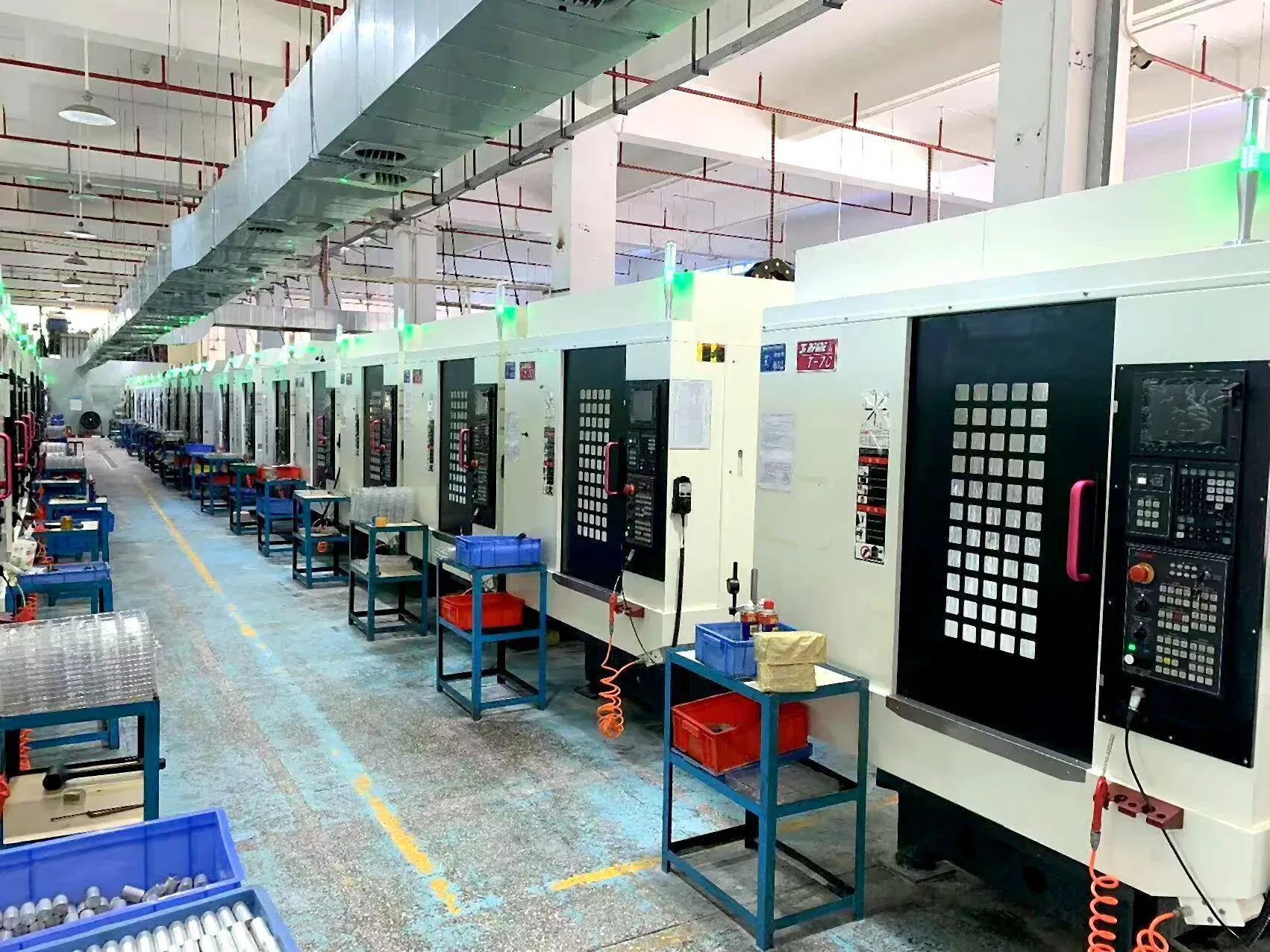
Why does a thin wall move?
Two mechanisms, and they need different answers.
The first is residual stress. Rolled or extruded aluminium carries internal stress from the mill. When you machine one side of a plate, you remove the material that was balancing the stress on the other side, and the part bows. A 20 mm plate reduced to a 1 mm wall can move 0.2–0.5 mm from stress release alone, long before any cutting force is considered.
The second is clamping. A vise closes on the part with tonnes of force. The wall deflects elastically under that force and cuts accurately in the deflected position — then springs back when the vise opens, and the finished wall is no longer where the tool left it. This is why a part can measure perfectly in the fixture and be out of tolerance on the bench.
A wall that measures correctly in the vise and wrongly on the CMM was never machined correctly — it was machined in a different shape.
What sequence actually works?
There is a sequence that handles both mechanisms, and it is not the intuitive one. Machining the wall to final size in one pass is the fastest route to a scrapped part.
- Rough both sides, leaving 0.5–1.0 mm of stock on the wall. Getting the bulk of the material out first lets the stress release while there is still enough thickness to stay stiff.
- Let the part relax. For stress-prone stock, hours rather than minutes; a stress-relief anneal between roughing and finishing is standard on critical thin-wall parts.
- Semi-finish, then release and re-clamp lightly. Releasing the part and re-seating it on a low-force fixture removes the stored clamping energy before the finishing pass that matters.
- Finish both sides symmetrically, in light passes. Cutting 0.1 mm from side A then 0.1 mm from side B keeps the stress balanced. Taking 0.5 mm from one side moves the wall and the second side chases it.
- Support the wall while finishing. Low-melt alloy, a wax fill, vacuum fixturing or sacrificial ribs — anything that raises the wall's natural frequency above the cutting frequency.
What is the practical wall thickness limit?
| Wall thickness | Aluminium, 100 mm tall | Stainless, 100 mm tall |
|---|---|---|
| 3.0 mm | Straightforward | Straightforward |
| 1.5 mm | Standard process, ±0.05 mm achievable | Care needed, chatter risk |
| 1.0 mm | Needs support and light passes; ±0.05 mm realistic | Difficult; expect hand work |
| 0.5 mm | Specialist — fill or vacuum fixture required | Usually a different process |
| 0.3 mm | At the edge of milling; consider forming | Not practical by milling |
These are working limits for a wall that has to hold a dimensional tolerance, not the thinnest wall that can be produced at all. A 0.3 mm wall can be milled in aluminium if it only has to exist; if it has to stay within ±0.05 mm over 100 mm of length, the process changes.
How should the design help?
- Equalise wall thickness. A wall that steps from 2 mm to 1 mm concentrates stress at the transition and moves unevenly. Uniform walls behave predictably.
- Add ribs instead of thickness. Stiffness comes from depth, not from mass: a 1 mm wall with a 3 mm rib is far stiffer than a 2 mm plain wall, and it machines faster because there is less material to remove.
- Radius the wall-to-floor junction. A sharp internal corner is a stress riser and a chatter source; R1 or larger changes both.
- Keep the wall short in the unsupported direction. Halving the unsupported height more than doubles stability, because deflection scales with the cube of the span.
The most common design mistake is specifying a thin wall for weight and then adding a tight flatness callout on it. Thin and flat are in tension with each other; if both are needed, say so, and expect the process — not the parameters — to be what delivers it.
About the author
CHX Precision Metal is a precision machining supplier in Shajing, Bao'an District, Shenzhen, founded in 2013. The floor runs 220 CNC machines — 100 five-axis machining centres (30 configured 3+2), 70 Tsugami Swiss-type lathes and 50 CNC lathes — under ISO 9001:2015 and ISO 14001:2015. Standard tolerance is ±0.005 mm, or better where the drawing requires it; prototypes ship in 3–7 working days, production in 7–15, MOQ 1 piece. Capability details: chxmetal.com
Quick answers
Short, self-contained answers to the questions this article is usually asked. Full reasoning is in the sections above.
What is the thinnest wall that can be machined in aluminium?
Around 0.3 mm is the practical limit for a wall that must merely exist, and it needs support such as a low-melt fill or vacuum fixture. For a wall that must hold ±0.05 mm, 1.0 mm is a realistic floor and 1.5 mm is comfortable.
Why does my part measure correctly in the vise but not on the CMM?
Clamping deflection. The vise force bends the wall elastically, the tool cuts it accurately in that deflected position, and the wall springs back when the vise opens. Re-clamping lightly on a low-force fixture before the finishing pass removes most of this error.
Does stress relief actually help thin-wall parts?
Yes, when the stock is stressed. A stress-relief anneal between roughing and finishing can remove the majority of the movement caused by material removal, which is often larger than the movement caused by cutting forces. On critical thin-wall parts it is standard practice rather than an option.
Can thin walls be machined on a three-axis machine?
Yes, but five-axis helps because the wall can be finished without re-fixturing, which removes a whole clamping cycle from the error budget. On a three-axis machine the part usually has to be flipped, and the second setup reintroduces the clamping error the first setup was designed to avoid.
Related CHX Metal services and notes
- 5-Axis CNC Machining — Single-setup machining for thin-wall parts.
- Preventing Chatter in Deep Pocket Milling
- Aluminium 6061-T6 vs 7075-T6 for Machined Parts