Swiss-Type vs Conventional Turning: Which to Choose and When
Swiss-type turning wins below 20 mm diameter when part length exceeds about 2.5 times the diameter, because the guide bushing supports the work right at the cut and deflection stops mattering. Conventional turning wins above 32 mm diameter, or on short parts where bar stock and guide bushings cost more than the support is worth.
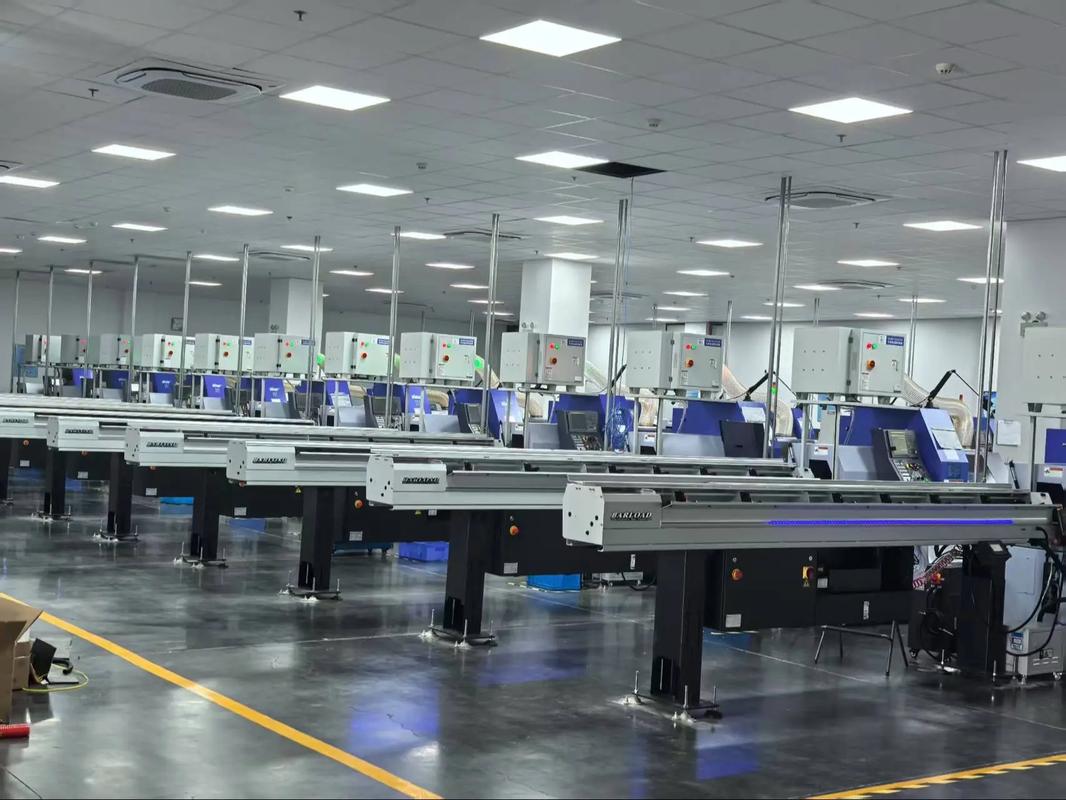
What does a Swiss-type lathe do differently?
On a conventional lathe the bar is held in a chuck and the tool travels along a part that hangs in free air. The further the tool gets from the chuck, the more the part bends away from it. On a Swiss-type machine the bar slides through a guide bushing and the tool works immediately next to that bushing — the part is never unsupported. The Z axis is the bar feeding forward, not the tool travelling.
The consequence is not a small improvement. Deflection scales with the cube of the overhang length, so a part that springs 20 µm on a conventional lathe at 4× diameter overhang can hold under 2 µm on a Swiss machine of the same nominal accuracy. This is why the process dominates anything long and thin: connector pins, contact pins, dental implants, fuel-system components, watch parts.
| Characteristic | Swiss-type (sliding head) | Conventional CNC lathe |
|---|---|---|
| Work support | Guide bushing at the cut; part never overhangs | Chuck only; part overhangs the full machined length |
| Practical diameter | Ø1–20 mm (B206: Ø2.0–20 mm) | Ø5–300 mm |
| Length-to-diameter | Comfortable at 5:1, workable to 10:1 | Difficult beyond 3:1 without a tailstock |
| Simultaneous tools | Often 5–8, several cutting at once | Typically 2 (one turning, one rotating) |
| Changeover | Fast on CNC models; slow on cam models | Fast |
| Sweet spot | Small, long, high volume | Large, short, or one-off |
Where does the guide bushing stop helping?
The guide bushing is a diameter-specific sleeve. Above roughly 32 mm the bar stock itself becomes heavy, the bushing has to be large, and spindle speed falls — the process loses the speed advantage that justified it. That is why Swiss shops typically stop at Ø20–26 mm and conventional or turn-mill machines take over above that.
Short parts are the second case. If a part is 12 mm long and 15 mm in diameter, it does not need support; a conventional lathe with a collet chuck loads, cuts and unloads faster than a Swiss machine can set up a guide bushing for the same job. Support costs money — an extra bushing, an extra setup, extra bar straightness requirements — and on a stubby part you get nothing for it.
Rule of thumb used on our floor: if the part would not visibly bend on a conventional lathe, the guide bushing is not earning its setup.
How does volume change the answer?
At low volume the deciding cost is setup, not cycle time. A Swiss machine needs the guide bushing sized and set, the bar feeder loaded and the program proven; on a cam-type machine it needs a cam change. If you are making 5 pieces, a conventional lathe with soft jaws will usually be in and out before the Swiss machine is ready.
At high volume the arithmetic inverts completely. Swiss machines cut with several tools at once, so cycle time on a multi-feature part can be 40–60% lower than a single-turret lathe, and a bar feeder means the machine runs unattended through the night. Above roughly 500 pieces the cycle-time advantage dominates and the setup cost has already amortised.
| Batch size | Usually best choice | Why |
|---|---|---|
| 1–20 pieces | Conventional CNC lathe | Setup dominates; no bushing to size or prove |
| 20–500 pieces | Either — decide on L/D ratio | Setup is amortised; geometry decides |
| 500–100,000 pieces | CNC Swiss-type | Multi-tool cycle time plus bar feeder |
| > 100,000 pieces, single part | Cam-type Swiss (Ø1–6 mm) | Shortest cycle time; cam cost amortised |
What about cam-type versus CNC Swiss machines?
A cam-type Swiss machine drives every axis from a camshaft rather than servo motors. There is no program to run and no servo to accelerate, so the cycle is brutally short — often 30–50% faster than a CNC Swiss machine on the same simple part. The trade-off is that changing the part means changing cams, which costs days and money.
Cam machines therefore suit one part running for months, typically small (Ø1–6 mm) and simple. CNC Swiss machines cost more per hour but switch parts in an hour, so they suit the mixed, high-productivity work that most contract shops actually sell.
Where do both processes lose?
Any part that needs substantial milling off-axis — flats on four sides, deep pockets, compound angles — is a poor fit for pure turning. On a Swiss machine those features are cut with small driven tools at low rigidity; on a lathe they need a second op on a mill. At that point a turn-mill or a five-axis machining centre is cheaper overall, even though its hourly rate is higher.
Thin-wall, large-diameter parts are the other loss case. Turning a 1 mm wall on a Ø80 mm aluminium ring invites chatter and distortion no matter which machine cuts it; the fix is usually process (support, fill, or a different operation sequence) rather than machine choice.
About the author
CHX Precision Metal is a precision machining supplier in Shajing, Bao'an District, Shenzhen, founded in 2013. The floor runs 220 CNC machines — 100 five-axis machining centres (30 configured 3+2), 70 Tsugami Swiss-type lathes and 50 CNC lathes — under ISO 9001:2015 and ISO 14001:2015. Standard tolerance is ±0.005 mm, or better where the drawing requires it; prototypes ship in 3–7 working days, production in 7–15, MOQ 1 piece. Capability details: chxmetal.com
Quick answers
Short, self-contained answers to the questions this article is usually asked. Full reasoning is in the sections above.
At what diameter should I switch from Swiss-type to conventional turning?
Around Ø20–26 mm for most shops, and by Ø32 mm almost always. The guide bushing has to match the bar, and above that size the bar weight and reduced spindle speed remove the speed advantage that justified the process in the first place.
Can a Swiss-type machine make short, stubby parts?
It can, but it is usually the wrong choice. A part with a length-to-diameter ratio under about 1.5 does not deflect meaningfully, so the guide bushing adds setup and bar-straightness requirements without buying accuracy. A collet lathe will normally be faster and cheaper.
Why are Swiss parts more expensive at low volume?
Because the guide bushing, bar feeder and program all have to be prepared before the first chip, and that preparation does not shrink with batch size. At 5 pieces the setup dominates; at 5,000 it has amortised to almost nothing.
Does a Swiss-type machine replace a machining centre?
No. Driven tools on a Swiss machine are small and low-rigidity, suitable for cross holes and small flats. Deep pockets, large face milling or compound angles still belong on a five-axis machining centre, and forcing them onto a lathe raises cost rather than lowering it.
Related CHX Metal services and notes
- Swiss-Type CNC Lathe Parts Supplier — CHX service page: 70 Tsugami lathes, Ø1–20 mm.
- CNC Lathe Mass Production — 50 lathes and 70 Swiss machines, 5 million pieces a month.
- Machining Medical Device Components: Why Swiss-Type Lathes Dominate