EV Liquid Cooling | Battery Thermal Management Components
CHX Precision Metal manufactures EV liquid-cooling components: battery cold plates, cooling connectors, manifolds and thermal interface brackets, machined to plus or minus 0.005 mm with 100 percent leak testing before shipment. Prototypes take 3 to 7 days and production 7 to 15 days. Documentation includes CMM reports and EN 10204 3.1 material certificates, under an ISO 9001:2015 system.
CHX Precision Metal (Shenzhen Changhexin Precision Hardware) manufactures EV liquid cooling components — battery cold plates, connectors and manifolds — with ±0.005mm tolerance and 100% leak testing for electric vehicle thermal management. ISO 9001:2015 certified.
EV Cooling Parts
- Battery pack cold plates
- Cooling connectors and fittings
- Manifolds and distributors
- Thermal interface brackets
Manufacturing
- CNC aluminum/stainless
- ±0.005mm sealing tolerance
- 100% leak testing
- Anodizing/passivation
Applications
- EV battery packs
- Power electronics
- Charging stations
- Energy storage systems
Quality
ISO 9001:2015 certified, fully leak tested for safety-critical thermal loops.
Cold Plates and Cooling Plates for EV Battery Packs
The two names a battery thermal engineer uses are cold plate and cooling plate, and the parts are the same family: a thin aluminium plate with internal channels that sits under a module and carries heat to the coolant loop. CHX Precision Metal machines the plate body, the manifold and the connector housings for 6061-T6 and 3003 brazing-sheet assemblies.
What we machine on a battery cold plate
- The channel cavity and the perimeter seal groove, machined from the same datum so the gasket seats evenly.
- Inlet and outlet ports, threaded or prepared for a push-fit connector.
- Mounting bosses and module locating features, held to ±0.005 mm on hole position.
- The module contact face, flat to 0.05 mm across the plate so thermal interface material spreads consistently.
Joining method changes the drawing
A machined plate is closed either by friction stir welding along the perimeter or by vacuum brazing with a clad sheet. FSW keeps the heat-affected zone narrow and preserves temper near the weld, which matters when the plate also carries structural load in the pack; brazing suits thinner and larger plates. Tell us the joining route at RFQ stage, because it changes the groove geometry, the flatness allowance and the leak-test pressure we plan for.
Leak and flow verification
Every closed plate is pressure-tested at 1.5× working pressure, and flow is checked on the first piece of each batch so a blocked channel is caught before the run continues. Dimensional reports cover port position, flatness and seal groove width.
Prototypes are machined in 3 to 7 days and production runs in 7 to 15 days; anodising, chromate conversion or nickel plating adds 3 to 7 days. Orders start at 1 piece.
Frequently Asked Questions
What EV cooling parts do you make?
Battery cold plates, cooling connectors, manifolds and thermal interface brackets.
How is leakage prevented?
Sealing faces are held to ±0.005 mm and each part is pressure-decay leak tested before shipment.
Which EV systems use these?
Battery packs, power electronics, charging stations and energy storage. Sealing faces are held to ±0.005 mm before pressure-decay testing.
Are you automotive-certified?
ISO 9001:2015 certified.
Get a Quote → Upload your drawing/3D model for a process plan and quotation within 24 hours.
Materials & Specifications
We machine EV liquid cooling components from 3003/6061 aluminum, brazed assemblies. Typical accuracy is ±0.005mm flatness on cold plates, leak-tested. Parts are manufactured to your 2D drawing or 3D model, in sizes from a few millimeters up to 1000mm envelopes, from single prototypes to hundreds of thousands of pieces per year.
Typical Applications
- battery cold plates
- coolant manifolds
- chiller and pump housings
- inverter cooling parts
These are representative examples; we regularly take on custom geometries outside this list. Send your drawing for a feasibility check.
Our Machining Capability
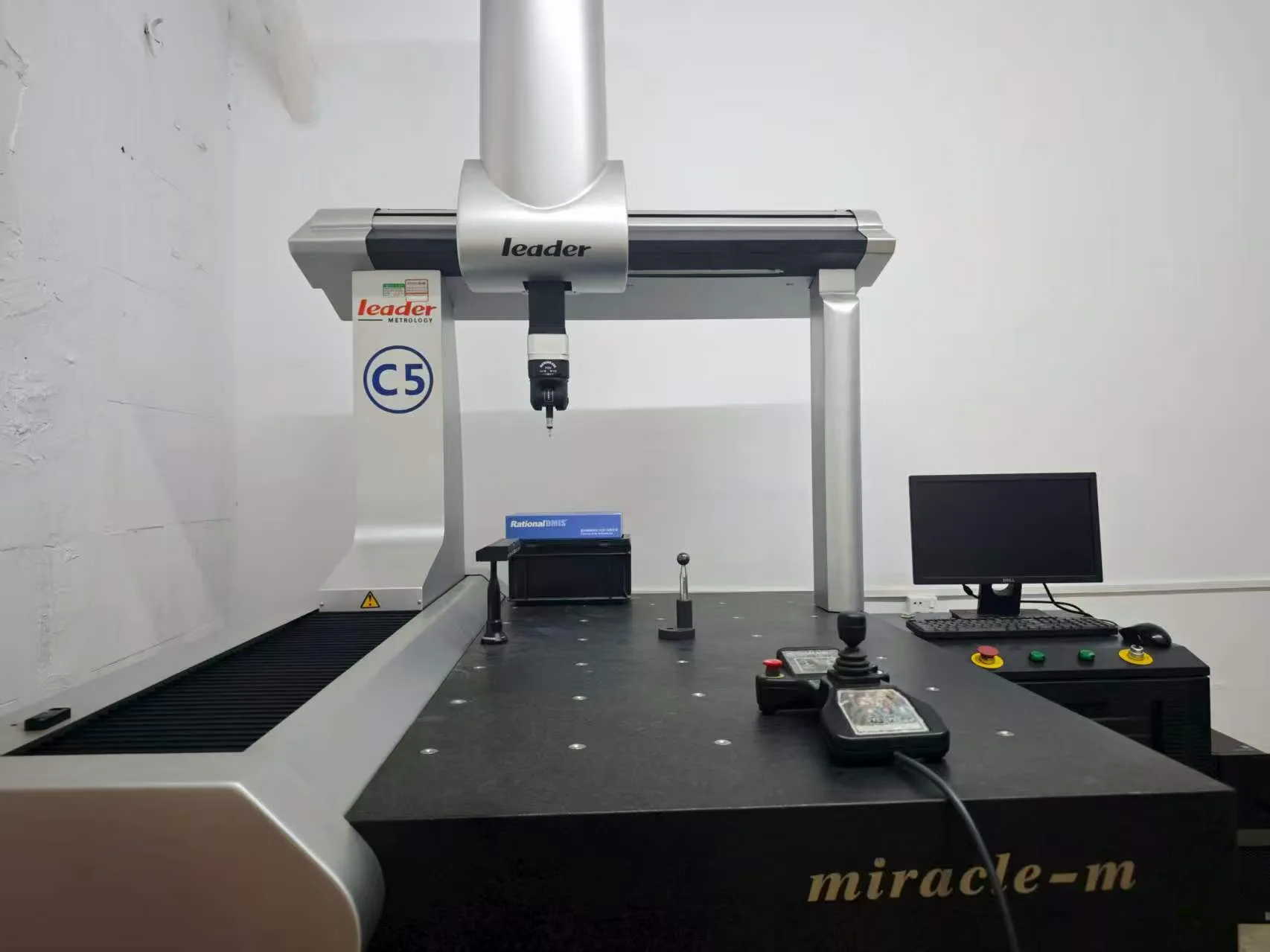
Production runs on 3-axis and 5-axis vertical machining centers, CNC lathes, and Swiss-type automatic lathes. Fixtures are designed in-house for repeatable clamping, and programs are simulated before cutting to protect tight tolerances. Quality is verified, not assumed. First article inspection is mandatory on every new part number, and our quality engineers record CpK on critical dimensions for volume programs. With a coordinate measuring machine (CMM), surface roughness testers, and a temperature-controlled inspection room, measurement uncertainty is kept far below the tolerances we quote.
Surface Finishing Options
Available finishes include Type II and Type III anodizing (clear, black, and custom colors), sandblasting, wire drawing, laser engraving and silk-screen marking, zinc and nickel plating, passivation, and black oxide. Cosmetic parts are inspected under standardized lighting with defined surface criteria.
MOQ, Lead Time & Packaging
Quotations with manufacturability feedback are returned within 24 hours of receiving your drawing or 3D model. Prototypes ship in 3-7 days; production orders run 7-15 days depending on quantity and finishing. Export packing uses anti-scratch film, VCI paper, or custom trays so parts arrive ready for your assembly line.
Why Choose CHX Precision Metal
Engineering support is included, not extra. Our CAM engineers review every drawing for manufacturability and cost reduction before quoting, and flag tolerance or finish decisions that materially affect price. Customers typically save 10-25% on program cost after this review.
Send your drawing, get a price in 24 hours
Name, email and what you need. Attach a drawing if you have one — STEP, PDF, DXF or a photo of the print. We reply with unit price, MOQ and lead time, usually within one working day.
Prefer email? Send drawings to mc@chxmetal.com.