What Drives the Cost of CNC Machining in China
By CHX Precision Metal Engineering Team · Published 2026-10-09
How a China CNC machining quote is built - material, machine time, setup, finishing, inspection and freight - and the design choices that lower unit cost. Operations are certified to ISO 9001:2015 and ISO 14001:2015, with CMM inspection on every batch. The factory runs 220 machines in Bao'an, Shenzhen - 100 machining centres (30 of them 3+2 five-axis), 50 CNC lathes and 70 Tsugami Swiss-type lathes - backed by in-house CMM, video measurement and roughness testin
A CNC quote is not a single number pulled from the air - it is a small bill of materials and operations. Understanding how it is built is the fastest way to see where your part's cost actually comes from, and where it can honestly be reduced.
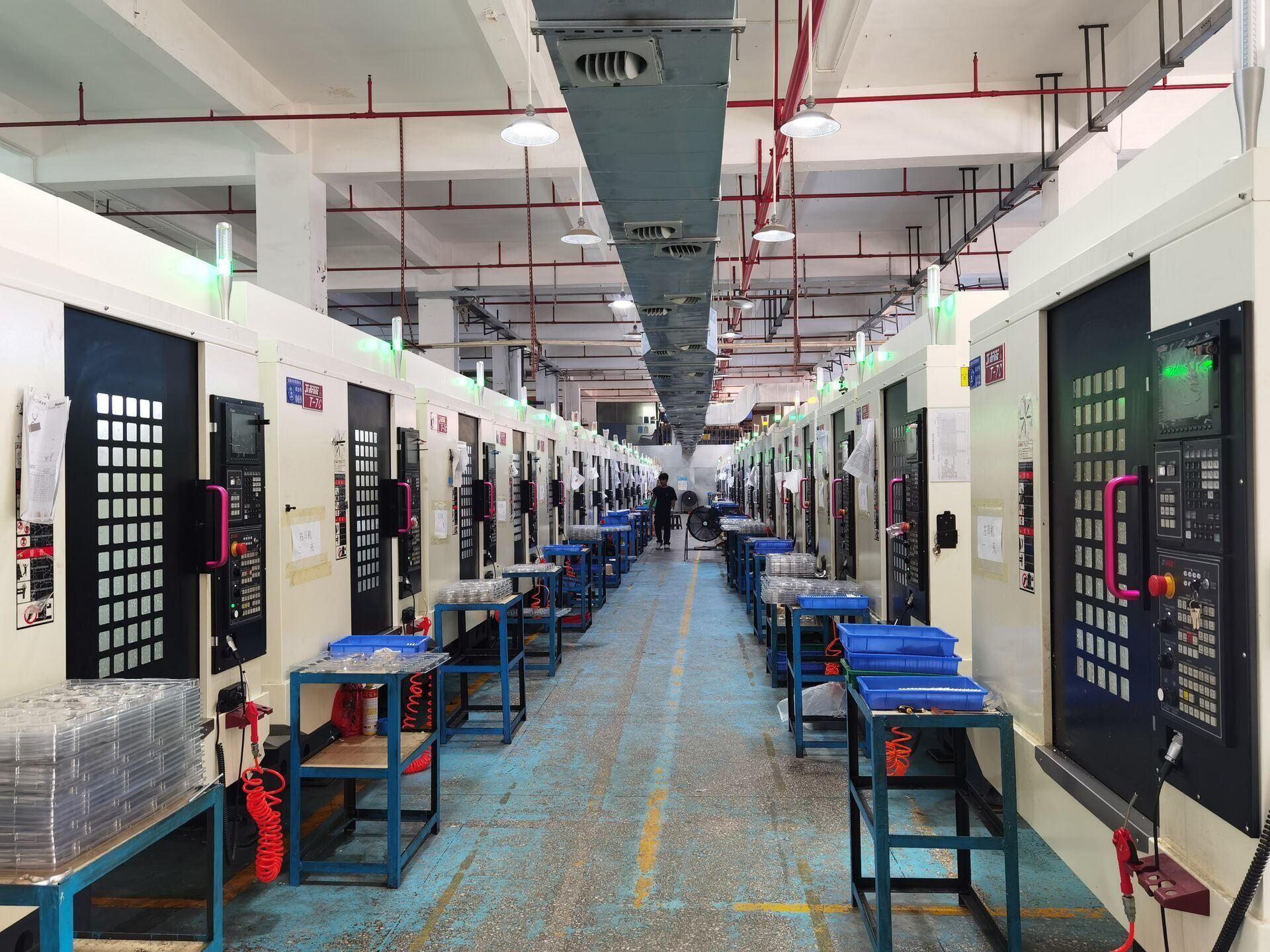
The six lines in a CNC quote
- Material. Priced by volume plus a waste allowance for the stock removed, and by grade - a titanium part can cost many times the same part in aluminium before any machining happens.
- Machine time. Cycle time multiplied by the machine rate. This is usually the largest line for a complex part, and it is set by geometry, tolerance and material.
- Setup. Fixturing, tool changes, first-article checks. On a small batch, setup spread across few parts is a large share; on a large batch it almost disappears per part.
- Finishing. Anodizing, plating, heat treatment or painting, priced by surface area and process, sometimes with a minimum batch charge.
- Inspection. Standard checks are minor; a full CMM layout with a formal report on every batch is a real line item.
- Packaging and freight. Export packing plus shipping, which depends on weight, volume and the Incoterm you choose.
Why quantity changes the price per part
Setup and programming are one-time costs. Spread over ten parts they dominate the unit price; spread over ten thousand they are negligible. That is why the same part quoted at 10 pcs and at 10,000 pcs shows two very different unit prices, and why the most economical way to test a design is often a small trial batch before a volume commitment.
Material also improves at quantity, because bar and plate stock can be bought to size instead of cut from larger stock with more waste.
What pushes cost up
- Tight tolerances spread across many dimensions, each of which must be verified.
- Thin walls and long slender sections, which need light passes and support.
- Undercuts, deep bores and features that need special tools or a second operation.
- Hard or gummy materials that slow the cut.
- Cosmetic finishes specified across the whole part rather than on visible faces.
- Low quantity for a complex part, where setup cannot be amortised.
What lowers cost honestly
- Relax tolerances that do not control function.
- Design for the process - for example, route slender rotational parts to a Swiss-type machine and let live tooling finish cross-features in one cycle.
- Standardise material grades and finishes across a product family, so stock and setup are shared.
- Consolidate several parts of an assembly into one machined part where rigidity allows, removing assembly labour and tolerance stack-up.
- Increase batch size where the design is stable, and keep the small-batch route for iterations.
None of these are shortcuts that trade quality for price. They are design decisions that remove cost before it is designed in.
How the quote is produced
A quote should come from an engineer who reads the drawing, not from a price table. At CHX Precision Metal every order is quoted against your drawing revision, and DFM feedback is returned with the quotation - typically within 12 working hours. There is no strict MOQ, so a single prototype can be validated before a batch is committed, and that prototype's inspection data becomes the reference for production.
A bargain price is not the lowest total cost
A quote that is far below the others is worth investigating rather than celebrating. It usually means something is being left out - a finish, an inspection step, or a tolerance that will not actually be held in production. The real cost of a part is the unit price plus the cost of any failure it causes, and a scrap batch or a late line-stop quickly outweighs a small saving at quotation.
Frequently asked questions
Why does the same part cost more at low quantity?
Setup, programming and fixturing are one-time costs. At low quantity they are spread over few parts, raising the unit price; at high quantity they become negligible.
How can I reduce CNC part cost without losing quality?
Relax non-functional tolerances, specify finish only where it is needed, design for the process, consolidate parts, and increase batch size once the design is stable. Each removes real cost without cutting corners.
Do you charge for quoting or DFM feedback?
No. Quotations and DFM feedback are free and come with no obligation to order, and there is no strict minimum order quantity.
How long does a quotation take?
Quotation requests are typically returned within 12 working hours. Send a 2D drawing or 3D model and, if a finish matters, say so, because it is part of the scope.
Send your drawings for a DFM review and a quotation
Email: mc@chxmetal.com | WhatsApp: +86-181-3885-0989
Shenzhen Changhexin Precision Hardware Co., Ltd. (CHX Precision Metal) · Shajing Street, Bao'an District, Shenzhen, Guangdong, China · ISO 9001:2015 (NOA1994293) · ISO 14001:2015 (05126E02909R253)
WhatsAppSend your drawing, get a price in 24 hours
Name, email and what you need. Attach a drawing if you have one — STEP, PDF, DXF or a photo of the print. We reply with unit price, MOQ and lead time, usually within one working day.
Prefer email? Send drawings to mc@chxmetal.com.