Medical Device Parts CNC Manufacturer
For medical device parts, CHX Precision Metal supplies a first-article inspection report, a CMM dimensional record and a material certificate traceable to the heat number with every batch. Parts are machined to plus or minus 0.005 mm on 220 machines in Shenzhen, with prototypes in 3 to 7 days and production in 7 to 15 days, under an ISO 9001:2015 quality system.
Medical Device Parts: Key Facts
| Location | Shenzhen, China |
| Equipment | 220 CNC machines total: 100 five-axis (30 of them 3+2 configurations), 50 bar-fed CNC lathes, 70 Tsugami Swiss-type sliding-headstock machines (bar capacity Ø1–20 mm) |
| Tolerances | Standard ±0.005 mm regardless of lot size; tighter where the drawing calls for it |
| MOQ | 1 piece, tiered pricing by quantity |
| Lead times | Prototypes 3–7 working days; production lots 7–15 working days; surface treatment 3–7 days |
| Materials | 316L stainless steel, TC4 titanium, PEEK and POM in the lead; 6061 aluminum for instrument housings and brackets |
| Quality | First-article inspection report, CMM dimensional record and EN 10204 3.1 material certificate traceable to the heat number with every batch; ISO 9001:2015 and ISO 14001:2015 |
| Shipping | EXW Shenzhen only - we are happy to recommend reliable freight forwarders. |
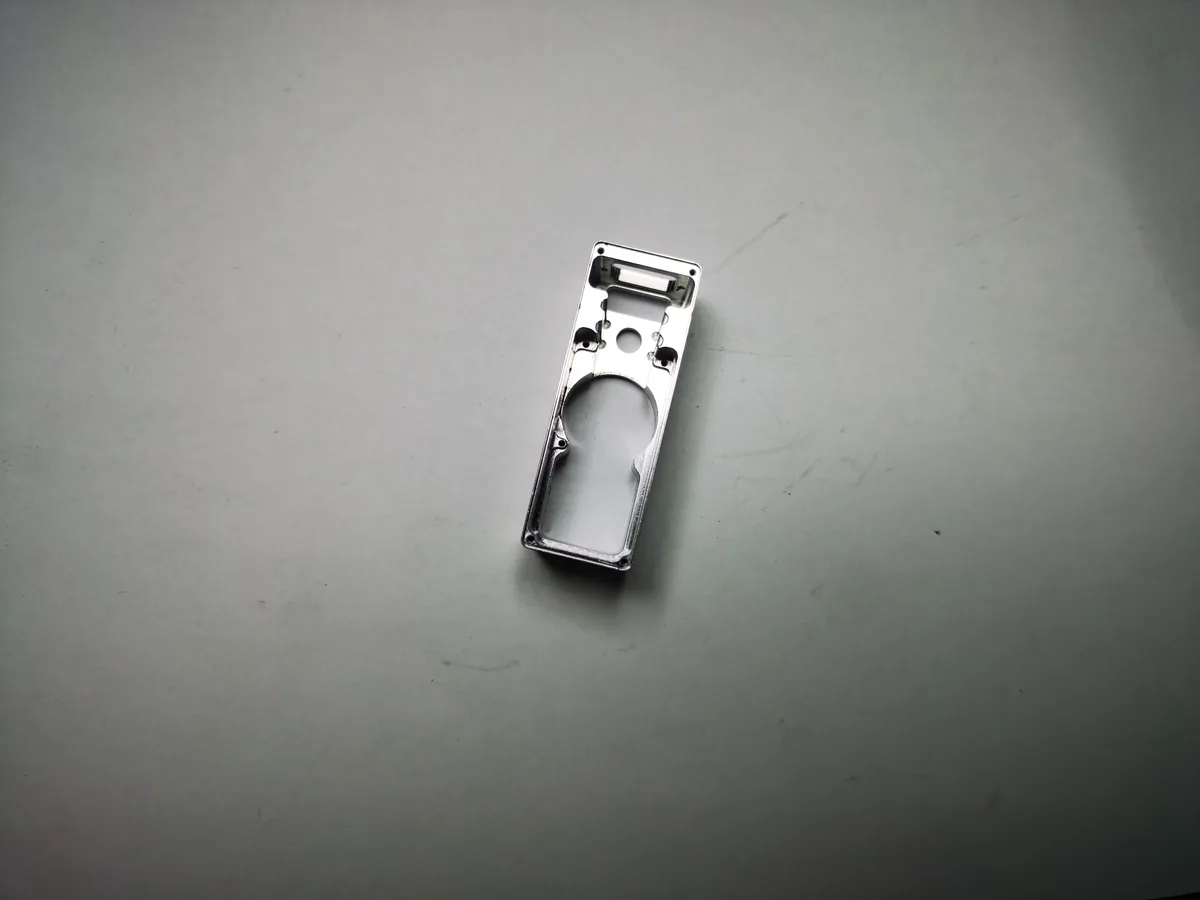
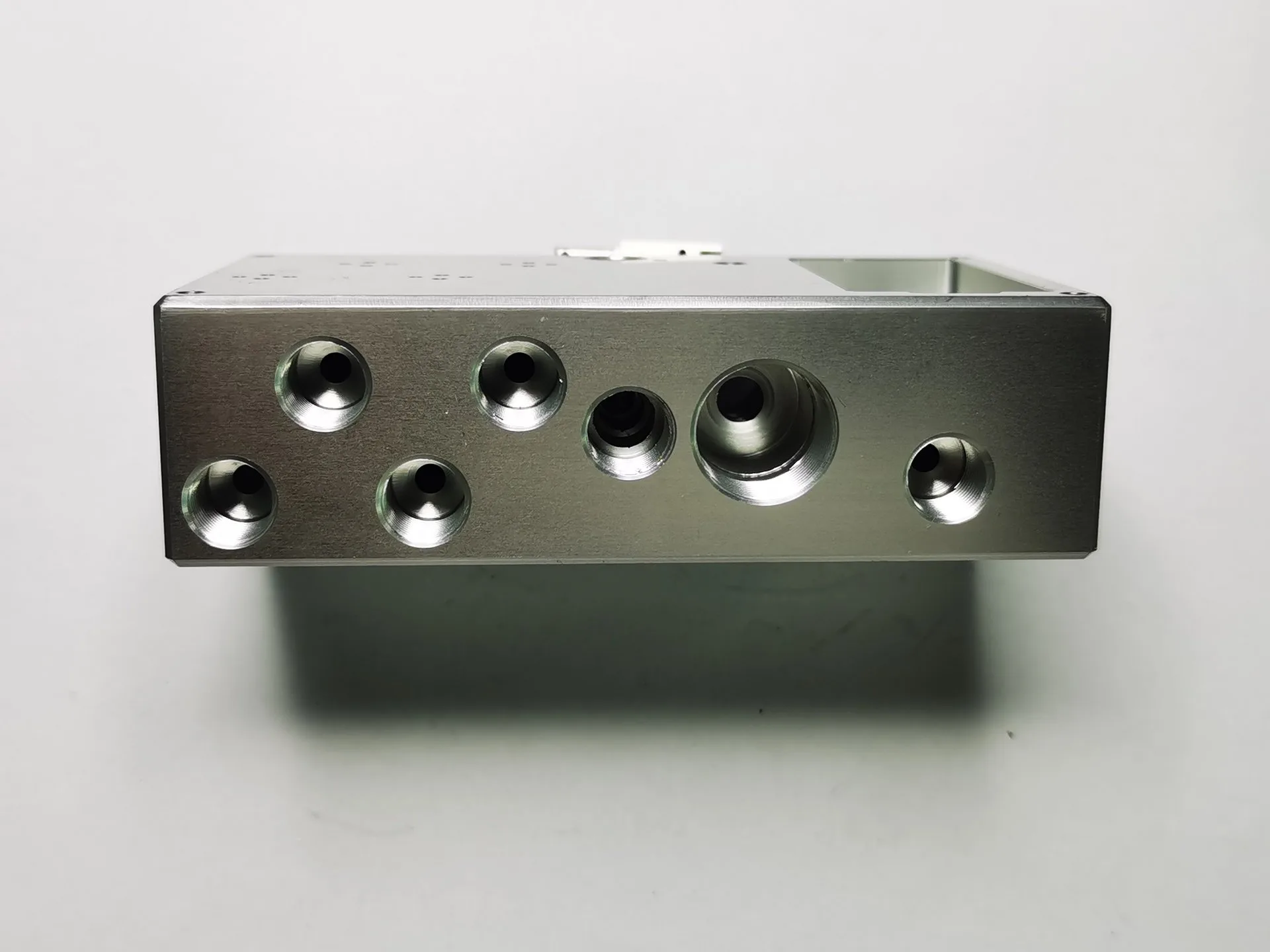
A medical device parts CNC manufacturer is judged on documentation before it is judged on price. The part either arrives with a first-article report, a CMM record and a material certificate that trace back to the heat number, or the incoming inspection queue stops. This page describes how that documentation is produced, and which part families it covers.
Shenzhen Changhexin Precision Hardware (CHX Precision Metal) manufactures precision components for the medical device industry - surgical instrument parts, diagnostic equipment components and in-vitro diagnostic fittings. We machine 316L stainless steel, TC4 titanium and medical-grade plastics such as PEEK, with material traceability documentation available.
Overview
| Materials | 316L stainless steel, TC4 titanium, PEEK, POM |
|---|---|
| General tolerance | ±0.005 mm |
| Precision tolerance | ±0.005 mm |
| Batch size | Prototype 1-100 pcs, mass production |
| Documentation | Material traceability, EN 10204 3.1 certificate, FAIR / CPK reports |
| Quality system | ISO 9001:2015 / ISO 14001:2015 |
Machining Services
- Precision CNC milling and turning for instrument components
- 5-axis machining for complex surgical instrument geometry
- Swiss-type turning for small diagnostic fittings
- Surface treatment and passivation for corrosion resistance
Medical Materials & Contamination Control
- 316L stainless steel for corrosion resistance and sterilisation cycles
- TC4 titanium for biocompatibility and light weight
- PEEK and POM engineering plastics for insulation and wear parts
- Dedicated tooling and segregated coolant management to reduce cross-contamination
- Material traceability and EN 10204 3.1 certificates on request
Capacity & Quality Control
- 220 production machines: 100 Taikan T600 machining centres, 50 CNC 46-series lathes, 70 Swiss-type automatic lathes
- 5,000 m2 factory in Shajing, Bao'an District, Shenzhen; 100+ employees
- 5 million pieces per month capacity
- First-article, in-process and outgoing inspection; critical dimensions verified on a CMM
- ISO 9001:2015 and ISO 14001:2015 certified
- Prototype in 3-7 days, mass production in 7-15 days; free DFM feedback
Part Families a Medical Device Parts CNC Manufacturer Runs
Medical work splits into a few recognisable families, each with a different failure mode:
- Surgical instrument components - jaws, shafts, handles and mechanism links in 316L or 17-4PH. Failure mode is burrs and edge quality; a burr on a laparoscopic jaw is a clinical problem, not a cosmetic one.
- Diagnostic and IVD fittings - fluidic connectors, cuvette holders and probe mounts in PEEK, POM or 316L. Failure mode is leakage at a sealing face, which means flatness and surface finish rather than dimensional tolerance.
- Implant-adjacent instruments - trial components and drill guides in TC4 titanium. Failure mode is surface contamination from tooling shared with other materials.
- Housings and enclosures - pump bodies, sensor housings and handpiece shells. Failure mode is wall thickness and internal finish, both of which affect cleanability.
Contamination Control: What Actually Separates Medical Work
Machining a medical part is not different from machining an industrial part. Machining it without cross-contamination is. Three controls carry most of the weight:
- Material segregation. Titanium and stainless tooling should not be shared. Titanium swarf embedded in a stainless surface becomes a corrosion initiation site, and it is invisible until it is not.
- Dedicated deburring. Shared tumbling media transfers residue between part families. Fine manual deburring under magnification, or a dedicated electrochemical process, is the usual answer.
- Cleaning before packing. Ultrasonic cleaning with a documented sequence, then particulate inspection under magnification. Parts that look clean to the eye routinely fail a wipe test.
Qualification Documentation: FAI, CMM and Material Certificates
The document set for a medical device part should be fixed at quotation, not negotiated at shipment:
- FAI report on every new part number, with ballooned drawing, measured values and pass/fail against each tolerance - approved before the batch is released.
- CMM dimensional report on critical characteristics at first article, batch start and final release.
- Material certificate to EN 10204 3.1 with heat number, matched to the parts it was made from.
- Process record showing routing, machine, operator and date per lot, so a traceability query can be answered in hours rather than weeks.
Tolerances on medical parts typically sit at +/-0.005 mm on functional features and Ra 0.4 um where a seal or a sliding fit seats. Materials covered: 316L, 17-4PH, TC4 titanium, PEEK, POM and medical-grade stainless bar stock.
Related Capabilities
Medical Device CNC Machining Supplier: Instruments, Handles and Housings
Most searches for this work use the word supplier rather than manufacturer, and they name the part: surgical instrument, instrument handle, endoscope housing, implant trial, dental component. CHX Precision Metal machines all of these as a contract supplier of metal and polymer components — the device manufacturer holds the regulatory submission, and we supply the parts, material certificates and inspection data that feed into it.
Surgical instruments and instrument handles
Handles, forceps blanks, scissor halves, retractor arms and trocar components are turned and milled from 17-4PH, 420 stainless, 316L or titanium, then passivated per ASTM A967 or bead-blasted to a matte finish. The surface that matters is the one the surgeon grips: edge break is held to a controlled radius, every burr is removed at the finger contact area, and joint face flatness is inspected so an assembled instrument does not rock.
Endoscope and camera housings
Housings are thin-wall aluminium or stainless parts where wall thickness, concentricity and thread alignment decide whether the optical stack stays collimated. We machine bore and shoulder to ±0.005 mm, hold wall thickness variation inside 0.05 mm and control sealing face flatness for the O-ring; internal bores are finished to Ra 0.8 µm when the drawing requires it.
Trial implants, dental and laboratory components
Trial implants, drill guides, dental abutment blanks and laboratory fixture plates are machined from titanium Grade 2 / Ti-6Al-4V, 316L, PEEK and POM. Tooling for titanium and for polymers is kept separate so material families do not cross-contaminate, and parts are cleaned and individually bagged.
Documents supplied with a medical part order
- Material certificate (EN 10204 3.1) traceable to the heat number.
- First article inspection report with CMM values against every drawing dimension.
- Passivation or cleaning record, plus lot traceability from raw bar to packed part.
- PPAP-style documentation package on request; the regulatory submission itself stays with the device manufacturer.
Prototype instruments ship in 3 to 7 days and production orders in 7 to 15 days, with passivation or anodising adding 3 to 7 days; a single piece is accepted for design verification.
Frequently Asked Questions
What materials do you machine for medical parts?
316L stainless steel, TC4 titanium, PEEK and POM. Material traceability certificates are available.
What tolerances can you hold?
±0.005 mm on standard parts and ±0.005 mm or better on precision features, with critical dimensions CMM-inspected and FAIR / CPK reports on request.
Do you support small batch prototyping?
Yes - 1 to 100 pieces for R&D stages, delivered in 3-7 days before moving to mass production.
How do I request a quotation?
Email your drawings (STEP/IGES/DWG/PDF) to mc@chxmetal.com. We reply with price and lead time within 24 hours.
Engineering notes: Why Swiss-Type Lathes Dominate Medical Device Components
WhatsAppSend your drawing, get a price in 24 hours
Name, email and what you need. Attach a drawing if you have one — STEP, PDF, DXF or a photo of the print. We reply with unit price, MOQ and lead time, usually within one working day.
Prefer email? Send drawings to mc@chxmetal.com.