Optical Communication Housing Manufacturer
An optical communication housing manufacturer is really being asked to hold two things at once: a mechanical envelope that fits a module, and an optical reference that does not move with temperature. Those two requirements pull in different directions, and the material and process choices that reconcile them are what separate a usable housing from a drawing that passes inspection and fails in the field.
Optical communication housings are machined from 6061-T6 or 7075-T6 aluminium, Kovar or PEEK, holding +/-0.005 mm or better on bore and interface dimensions, with flatness verified on a CMM before anodising. CHX Precision Metal runs 220 CNC machines in Shenzhen; prototypes take 3-7 working days, production 7-15, MOQ 1 piece.
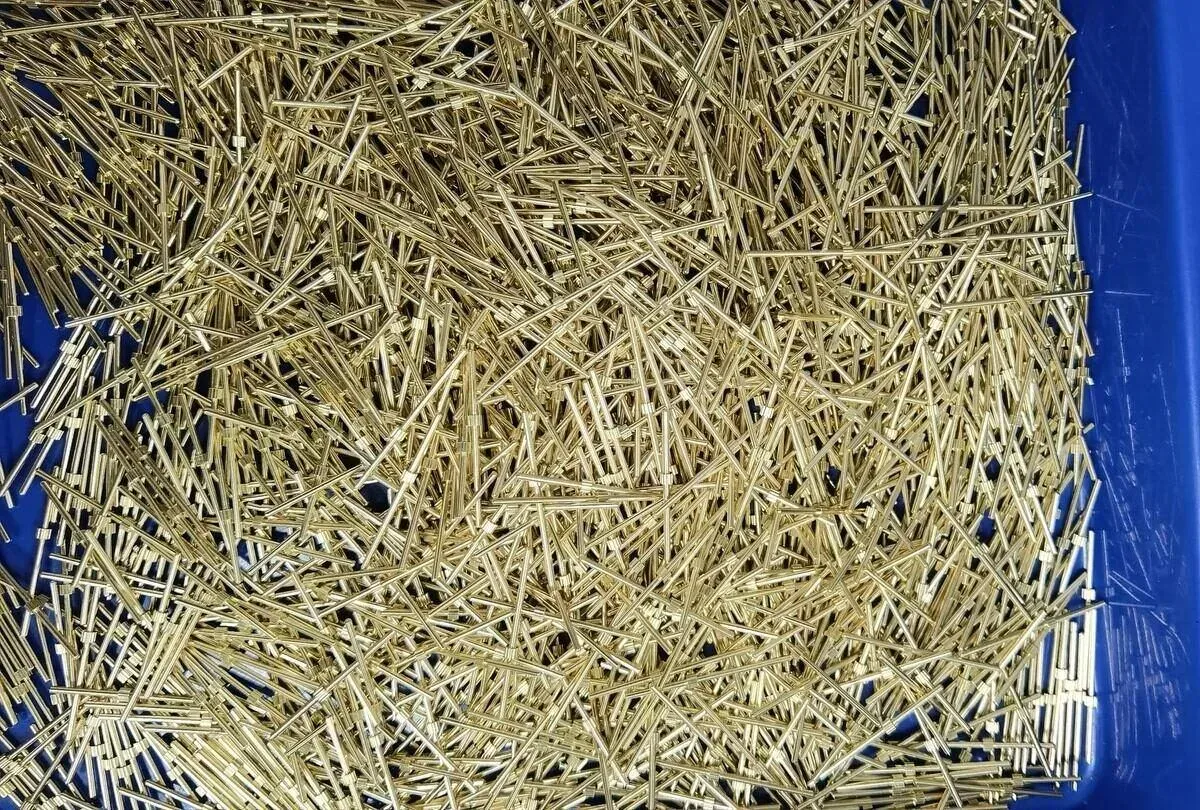
CHX Precision Metal machines metal housings for optical modules, TO-Can packages, transceivers and silicon photonics assemblies. We work from 2D drawings or 3D models and quote within 24 hours. CHX Precision Metal runs 220 CNC machines in Shenzhen, including Swiss-type lathes and 5-axis machining centres.
Materials
- Kovar 4J29 (expansion matched to glass and ceramic seals, for hermetic packages)
- 6061-T6 and 7075-T6 aluminum (non-hermetic housings, lightweight structures)
- 316L stainless steel (corrosion resistance, medical and industrial optics)
- Oxygen-free copper and tungsten-copper for thermal management inserts
How is airtightness ensured for optical housings?
CHX Precision Metal machines Kovar 4J29 housings whose thermal expansion matches glass and ceramic seals, then verifies each part with helium mass spectrometry leak testing. X-ray inspection and infrared imaging reports are available on request.
Which material suits silicon photonics packages?
Kovar 4J29 is the usual choice for silicon photonics packages because its thermal expansion is close to that of silicon and glass lids. 6061 aluminum suits non-hermetic housings and 316L stainless steel suits corrosive environments.
What is the minimum order quantity?
The minimum order quantity is 100 pieces with tiered pricing from 500 pieces. Samples ship in about 7 days and production orders in 10 to 15 days.
Tolerances and Processes
- General tolerance +/-0.005 mm, critical bores and seal faces to ±0.005 mm or better
- CNC milling, turning, wire EDM for narrow slots, and precision surface grinding
- Seal face flatness controlled with CMM and optical flat inspection
- Helium mass spectrometry leak testing, X-ray inspection and infrared imaging on request
- Finishes: electroless nickel plating, gold plating, Type II and Type III anodizing, bead blasting
- Cleaning and packaging suitable for optoelectronic assembly lines
Typical Applications
- Optical transceiver and optical module housings
- TO-Can and butterfly package bodies
- Silicon photonics and photonic integrated circuit packages
- RF and microwave filter cavities
- Laser diode and photodetector mounts
- Fiber optic alignment fixtures and submounts
Quality and Documentation
CHX Precision Metal operates under ISO 9001:2015 and ISO 14001 management systems. Every order can ship with material certificates, dimensional inspection reports and CMM data. First article inspection reports are provided for new part numbers.
Lead Time
- Samples: 3-7 days after drawing review
- Small batch (100 to 1,000 pieces): 7-15 days
- Repeat production orders: scheduled per rolling forecast
Request a Quote
Send your drawings or 3D models to mc@chxmetal.com or call +86 18138850989. We reply with a quotation and a design for manufacturability review within 24 hours.
Housing Geometries and Material Choices
Optical communication housings fall into three broad groups, and the material follows from the function rather than from cost:
- Transceiver and module shells - usually 6061-T6 or 7075-T6 aluminium for thermal path and weight. The machining problem is wall thickness on a long, thin shell: clamping pressure closes the bore, and the part springs back out of tolerance when released.
- Laser and photodiode packages - Kovar or Alloy 42 where the CTE has to match a sealed glass feedthrough. Kovar is difficult to machine cleanly and work-hardens under a dull tool, so tool life planning matters as much as the toolpath.
- Fiber management and splice trays - PEEK or engineering plastics where the requirement is dimensional stability and low outgassing rather than stiffness.
Flatness, Parallelism and CTE: Where Tolerance Stacks Bite
Optical alignment tolerances are often tighter than the mechanical drawing suggests, because a 0.01 mm shift over a 20 mm lever becomes a measurable coupling loss. Three characteristics deserve explicit control:
- Flatness of the mounting face - typically 0.01 mm over the full face. Machining flatness is achievable; maintaining it through anodising is not automatic, because the oxide layer grows unevenly on edges and corners.
- Parallelism between the optical axis bore and the mounting face - the error that most often escapes inspection, because it requires a CMM alignment rather than a simple dimension check.
- CTE mismatch at the interface - an aluminium housing bolted to a ceramic or glass subassembly moves differentially with temperature. The fix is usually a compliant interface or a material change, not a tighter tolerance.
Practical figures: +/-0.005 mm on bore and interface dimensions, 0.01 mm flatness on the mounting face, Ra 0.4 um on any surface that contacts an optical element.
Sealing, Plating and the Order of Operations
The most expensive optical housing errors are process-sequence errors. Anodising after final inspection changes dimensions by 5-15 um per surface depending on the coating thickness specified. Plating on a threaded feature changes the pitch diameter enough to fail a gauge. The sequence that avoids both: machine with plating allowance, plate, then final-inspect and, where required, re-machine sealing faces after coating.
Related Capabilities
Frequently Asked Questions
What precision can you achieve for optical housings?
Housing tolerances down to ±0.005mm, with surface roughness machined to your drawing specifications.
Which materials do you use for optical housings?
Primarily aluminum (6061/7075) and stainless steel, balancing thermal dissipation and structural strength.
Can you handle small batches?
Yes. We accept orders from 1 prototype piece; sample lead time is typically 3-7 days.
Send your drawing, get a price in 24 hours
Name, email and what you need. Attach a drawing if you have one — STEP, PDF, DXF or a photo of the print. We reply with unit price, MOQ and lead time, usually within one working day.
Prefer email? Send drawings to mc@chxmetal.com.