Dexterous Hand Finger Pads & Tactile Sensor Housings
Sensor-Ready Cavity • ±0.005mm Profile • PEEK / 7075 / Silicone Hybrid
 Get a Quote
Call +86 181-3885-0989
Get a Quote
Call +86 181-3885-0989
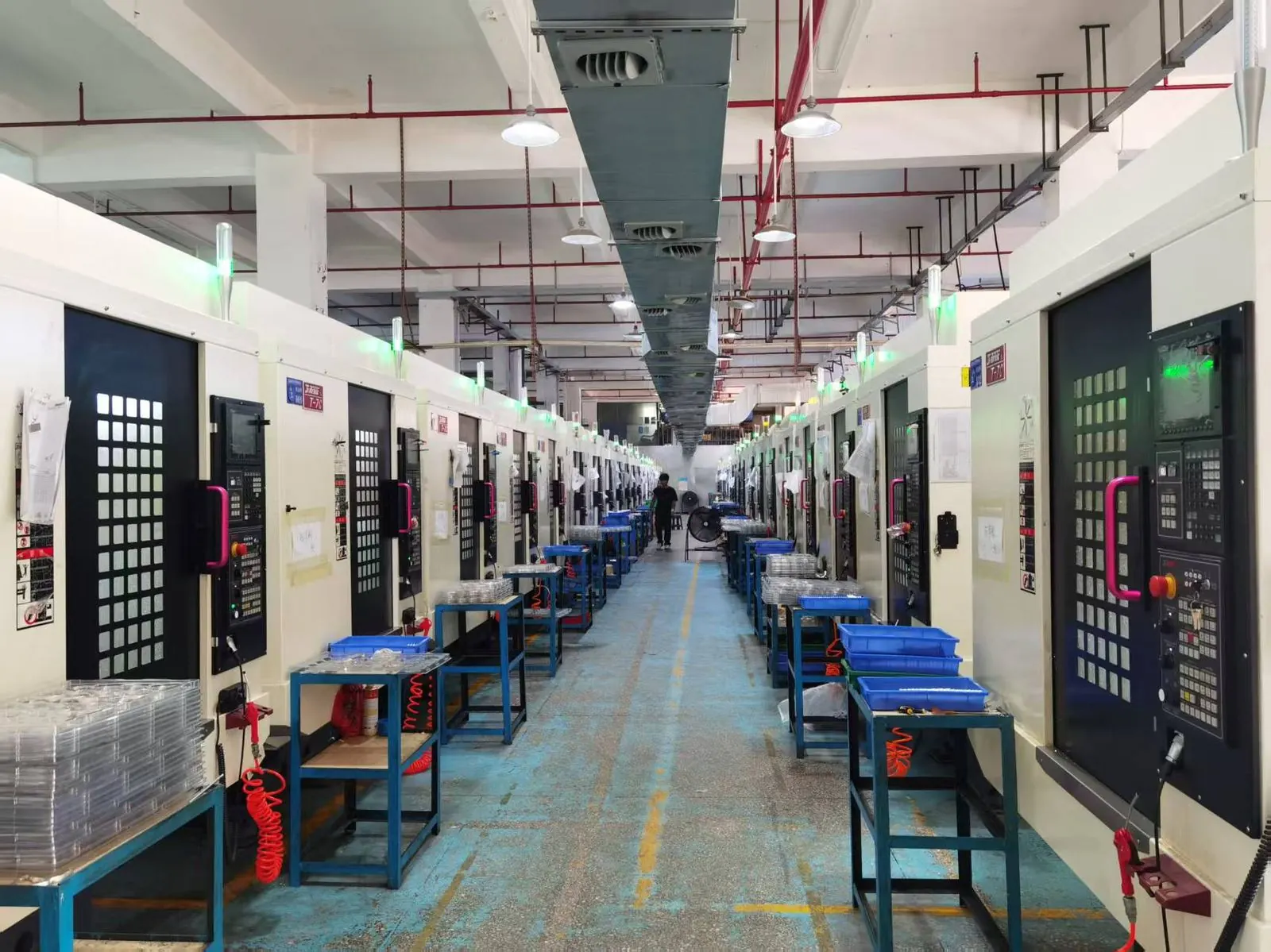
CNC machined dexterous hand finger pads and tactile sensor housings. PEEK, 7075 aluminium and silicone-ready surfaces with a ±0.005mm cavity profile. CHX Metal runs 220 CNC machines in Shenzhen, including Swiss-type lathes and 5-axis machining centres.
Why CHX Metal for Dexterous Hand Finger Pads
A finger pad is the contact layer that carries the tactile array, and its cavity depth, flatness and edge radius decide how well the sensor reads. We machine the rigid pad body so that the sensing window, cable exit and mounting posts are produced in one setup, then leave a defined surface for silicone overmoulding where a compliant skin is needed.
- Sensor cavity control — cavity depth and floor flatness held to ±0.005 mm so the tactile array sits at a defined height.
- Smooth sensing face — Ra 0.4 or better on the contact surface for optical and capacitive arrays.
- Cable and FPC routing — internal slots and exit windows sized to the flexible circuit, with radiused edges to avoid abrasion.
- Silicone-ready bonding surface — controlled roughness and moulded retention features for overmoulded or bonded skins.
- Lightweight body — ribbed or pocketed geometry to reduce moving mass at the fingertip without losing stiffness.
Finger Pad Types We Machine
Capacitive array pads
Flat, dimensionally stable faces that keep each electrode at a known distance from the skin.
Optical tactile pads
Machined housings with an optical path and a defined contact membrane seat.
Piezoelectric pads
Rigid, flat seating surfaces that transfer vibration from the contact face to the element.
MEMS barometric pads
Sealed chambers with a controlled air path between the contact surface and the sensor port.
Soft pneumatic contact pads
Rigid bodies that accept an air channel and a moulded elastomer contact layer.
Materials & Tolerances
The pad body is chosen for a combination of low mass, dimensional stability and compatibility with the sensor build:
- PEEK — low moisture uptake and high stiffness for stable optical and capacitive cavities, including grades suitable for medical devices.
- 7075-T6 aluminium — structural pad bodies and the brackets that hold them, with anodised wear faces.
- POM (acetal) — dimensionally stable, low-friction bodies for general purpose pads.
- PI (polyimide) — thermal stability where the pad sits close to a heated element.
Tolerances: cavity depth and floor ±0.005mm. Surface finish: Ra 0.4 on the sensing face, Ra 1.6 on general exterior surfaces. Silicone bonding: controlled Ra 1.6–2.4 on bonded faces.
Frequently Asked Questions
How precisely is the sensor cavity machined? Cavity depth and floor flatness are held to ±0.005mm. Each batch is verified on a coordinate measuring machine and a dimensional report is available on request.
Can you route an FPC cable through the pad body? Yes. We machine internal slots, bend radii and exit windows sized to your flexible circuit, with the edges radiused so the cable is not cut or worn during flexing.
Do you overmould silicone onto the pad? We provide a defined bonding surface with controlled roughness and retention features for overmoulding or adhesive bonding. Silicone overmoulding is coordinated with the pad machining so the interface is fixed before production.
What surface finish is needed for a capacitive array? Ra 0.4 or better, flat within ±0.005 mm across the active area, so each electrode keeps a uniform distance to the contact skin.
Can you reproduce an existing dexterous hand design? Yes. Send the CAD model or a sample with key dimensions. We confirm the datum scheme during DFM review and machine pads that interchange with your current assembly.
Need Dexterous Hand Finger Pads? Get a Quote in 24 Hours.
Send your drawing or 3D model (PDF, STEP or IGES). DFM feedback and quotation are free.
Request a Quote →