Humanoid Robot Parts Manufacturer
We supply machined parts to humanoid robot builders, mostly in the prototype-to-small-series band of 1 to 5,000 units. 220 machines, 30 of them five-axis, cover links, joints, fingers and end effectors. ±0.005 mm, non-disclosure signed as standard, first articles in 3–7 days. Drawings never leave the building.
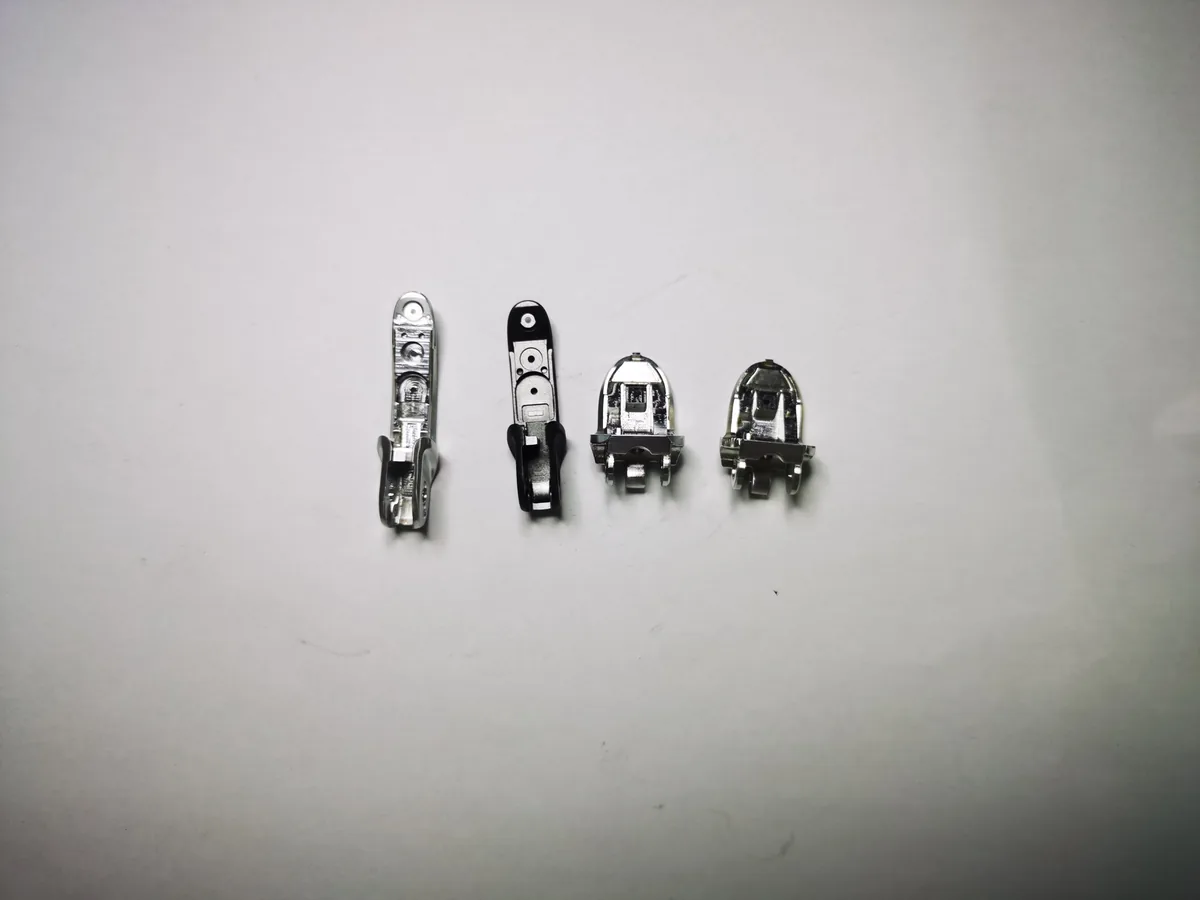
A humanoid robot parts manufacturer has to survive three very different regimes in the same programme: a single prototype that must be right on the first article, a pilot batch that must match it, and a production ramp where cost per part starts to matter more than anything else. CHX Precision Metal runs all three on the same equipment and the same inspection plan, which is why robot programmes tend to stay once they start.
220 CNC Machines • 5M pcs / Month • ISO 9001:2015 • Prototype to Volume
 Get a Quote
Call +86 181-3885-0989
Why Buyers Choose CHX Precision Metal as a Humanoid Robot Parts Supplier
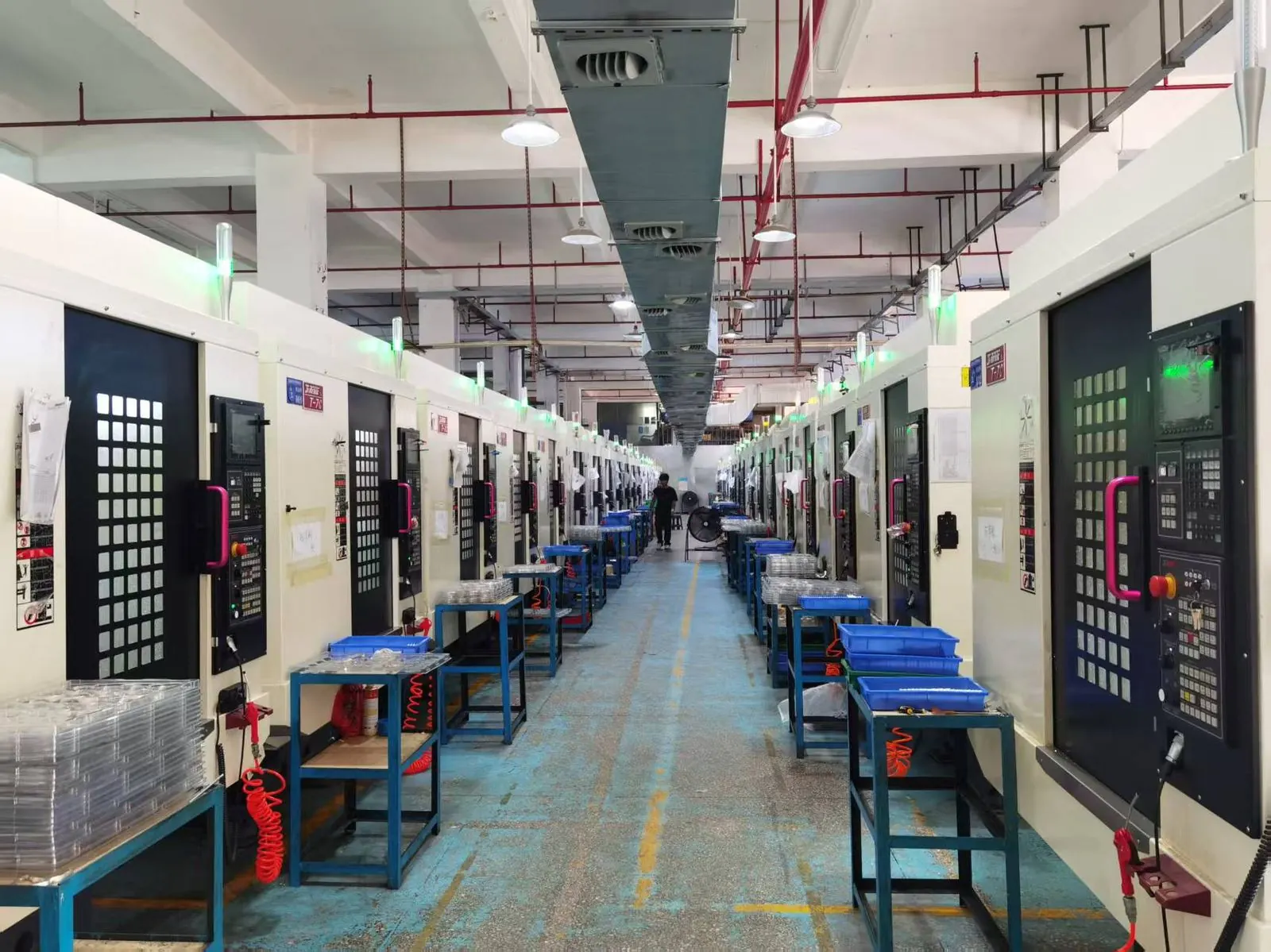
Robot programmes move through a prototype stage, a pilot batch and a production ramp, and the supplier has to stay the same across all three. Our plant runs 220 CNC machines - 100 Taikan T600 machining centres (30 of them 3+2 five-axis), 50 CNC 46-series lathes and 70 swiss-type lathes - so a design that is proven on one machine can be scaled on the same process rather than re-qualified at a new vendor.
- One supplier from prototype to series — the same equipment and inspection plan cover a single-piece sample and a monthly production order.
- In-house inspection — 8 inspection instruments including a coordinate measuring machine, with dimensional reports issued on request.
- Material coverage — 7075-T6 and 6061-T6 aluminium, TC4 titanium, 304/316L stainless steel, PEEK, POM and engineering plastics.
- Finishing under one roof — anodising, bead blasting, passivation, polishing and laser marking coordinated with machining.
- Export-ready logistics — protective packaging for high-value assemblies and worldwide shipping by air or sea.
Supply Scenarios We Support
New product introduction (NPI)
DFM feedback on your drawing before tooling, then a first-article sample for design validation.
Pilot and bridge batches
Small lots for field trials and pilot builds, machined without dedicated tooling.
Production ramp
Repeat orders held to the same datum scheme, inspection plan and surface treatment as the approved sample.
Engineering change management
Revised revisions machined and documented so your bill of materials stays traceable.
Spare parts and service kits
Low-volume replacement parts for installed robots and service organisations.
Materials, Tolerances & Documentation
Typical humanoid robot parts are machined to ±0.005 mm or better on functional features, ±0.005 mm general, depending on the drawing:
- Aluminium 7075-T6 / 6061-T6 — structural links, housings and brackets with a high stiffness-to-mass ratio.
- Titanium TC4 (Grade 5) — highly loaded joints that must resist repeated impact.
- Stainless steel 304 / 316L — wear surfaces, shafts and washdown environments.
- PEEK, POM and PI (polyimide) — insulating carriers and low-friction contact pads.
Documentation: dimensional inspection report, material certificate on request, and packaging sized for robotic assemblies. Confidentiality: drawings and models are handled under NDA and are not shared outside the project team.
Humanoid Robot Sub-assemblies We Machine
Humanoid and collaborative robot programmes rarely buy a single part - they buy a family of kinematic and sensor components that have to fit and move together. We machine the following sub-assemblies from prototype quantities upward, on the same equipment and inspection plan.
Hand and wrist joints
Crossed-roller and strain-wave housings, bearing seats and covers held to a common datum so the joint runs concentric.
Finger joints and linkages
Small clevis, pin and pivot parts where the length-to-diameter ratio suits Swiss-type turning and fit drives repeatability.
Fingertip covers and pads
PEEK and engineering-plastic contact surfaces machined for tactile-sensor windows and repeatable grip.
Dexterous hand tactile pads
Sensor housings and compliant contact pads with flatness and surface finish held on the sensing face.
End effectors and wrist modules
Mounting flanges, adapter plates and gripper bodies machined to a bolt pattern that has to match the arm.
Structural links and brackets
Aluminium and titanium links, motor mounts and covers where the stiffness-to-mass ratio matters.
Design Considerations for Humanoid Robot Parts
Robot parts concentrate requirements that interact - light weight, high stiffness, tight fit and long wear life. These are the points we raise most often during a DFM review:
- Wall thickness and weight. Aluminium 7075-T6 is common for load-bearing links because it holds stiffness at low mass; keep walls uniform so the part does not distort after machining.
- Tolerance stacking. A wrist that runs true depends on the joint housing, bearing seat and cover sharing a datum. Specify functional tolerances on the interfaces rather than everywhere.
- Wear surfaces. Pins that articulate repeatedly need a harder or lower-friction surface - 304/316L, or a coated aluminium - rather than bare aluminium running on aluminium.
- Sensor interfaces. Tactile and encoder mounting faces need flatness and finish control, because a sensor sitting on a rough face reads noise.
- Deburring. Small linkage parts must be deburred without rounding functional edges; that is a process choice as much as a finishing step.
Quality Control and Traceability
We inspect in-house with 8 instruments including a coordinate measuring machine, and issue dimensional inspection reports against your drawing on request. Material certificates are available for the metals we machine, and every order is quoted by an engineer working to your drawing revision. Drawings and models are handled under NDA and are not shared outside the project team. For the checks that matter when choosing any machining supplier, see our 10-point supplier vetting checklist.
Part Families a Humanoid Robot Parts Manufacturer Machines
Humanoid programmes converge on a small number of part families, and each has its own machining logic:
- Finger joints and knuckles - small, multi-sided, tight bore-to-bore position. Five-axis in one setup beats a three-operation route because every re-clamp adds position error that the assembly cannot absorb.
- End-effector mounts and wrist flanges - flatness and bolt-pattern position dominate over dimensional tolerance. A 0.02 mm flatness error on a 90 mm flange shows up as visible runout at the tool centre point.
- Sensor and camera housings - wall thickness control and internal finish matter more than external tolerance; thin walls deflect under clamping pressure and spring back after release.
- Structural brackets and links - stiffness per gram. 7075-T6 is the usual answer, with pocketing that keeps a minimum wall rather than removing material until the part looks light.
- Fingertip pads and contact surfaces - often PEEK or POM, where machining strategy is about avoiding stress and burrs rather than hitting microns.
Tolerance and Inspection Strategy for Robot Parts
Robot parts are usually specified tighter than they can be measured in a hurry, so the inspection plan has to be agreed before the first chip. Three things matter:
- Datum scheme. Functional features should be inspected from the same datum the assembly uses. A part that is in tolerance from its own machining datum but out of position relative to the mating face will still fail at build.
- GD&T over plus/minus. Position, profile and perpendicularity describe the requirement; a bilateral tolerance on a bolt circle does not.
- Instrument match. A coordinate measuring machine for position and form, a roughness tester for surface, and a hard gauge for anything measured hundreds of times per shift. Quoting a tolerance without naming the instrument is the single most common weakness in a supplier response.
Practical figures on aluminium and titanium robot parts: +/-0.005 mm on functional features, ISO 2768-m limits on non-critical pockets, Ra 0.8 um as-machined and Ra 0.4 um where a bearing or seal seats. Anything tighter than +/-0.003 mm should be challenged in design review before it reaches the shop floor.
Related Capabilities
Frequently Asked Questions
What is your minimum order quantity?
One piece for prototypes, and we accept small pilot lots. Prototype and series parts are machined on the same equipment, so there is no process change between the two.
What lead times can you hold?
Prototypes ship in 3-7 days and production runs 7-15 days after drawing approval, plus 3-7 days for surface treatment. Repeat orders usually run faster once the process is fixed.
Can you supply inspection documentation?
Yes. We issue dimensional inspection reports on request and can inspect to your own control plan. Material certificates are available for the metals we machine.
Will you sign an NDA before receiving drawings?
Yes. We review and sign confidentiality agreements before any drawing or 3D model is transferred, and files stay inside the project team.
How do you package and ship robot parts?
Parts are protected individually, cushioned in foam-lined cartons, and shipped by express air or sea freight depending on volume and destination.
Looking for a Humanoid Robot Parts Supplier? Get a Quote in 24 Hours.
Send your drawing and target volume (PDF, STEP or IGES). DFM feedback and quotation are free.
Request a Quote →Send your drawing, get a price in 24 hours
Name, email and what you need. Attach a drawing if you have one — STEP, PDF, DXF or a photo of the print. We reply with unit price, MOQ and lead time, usually within one working day.
Prefer email? Send drawings to mc@chxmetal.com.